Looking back, among the many, it seems to be ten
~ Heiraku
Life continues to guide me daily, sometimes with detours and at other times with quiet reminders. My recent projects have included finally sorting through boxes from my mother’s garage. After her passing several years ago, I was able to rehome the majority of her things. Still, the mendokusai 面倒くさい, (bothersome, tiresome, or that something requires too much effort to do) things just moved from her garage to a storage shed I had built just for her on my property. Sorting through box by box, I realized she had never properly gone through her own mother’s things, and it went down through the generations, including my great-grandparents’.
Today’s find made me pause. Even though it was yet another scroll, it wasn’t with the others. Instead, it sat alongside other ancestral keepsakes.
My grandparents’ home held many scrolls. My great-grandparents, who emigrated from Japan, lived with my grandparents because my grandfather was the eldest son. My great-grandfather wrote some as he practiced calligraphy endlessly, while others came from known artists. Their origin did not factor into the placement of the work.
Through all of the years I spent in those rooms, I never knew what the scrolls said until now. I came upon a very special one in a box within a box. With the help of translation tools, I discovered it was a Heart Sutra. I remember that particular scroll; it was in pristine condition, always regarded with reverence, but only occasionally on display. It must have had a special meaning for an occasion, which is lost to me now.
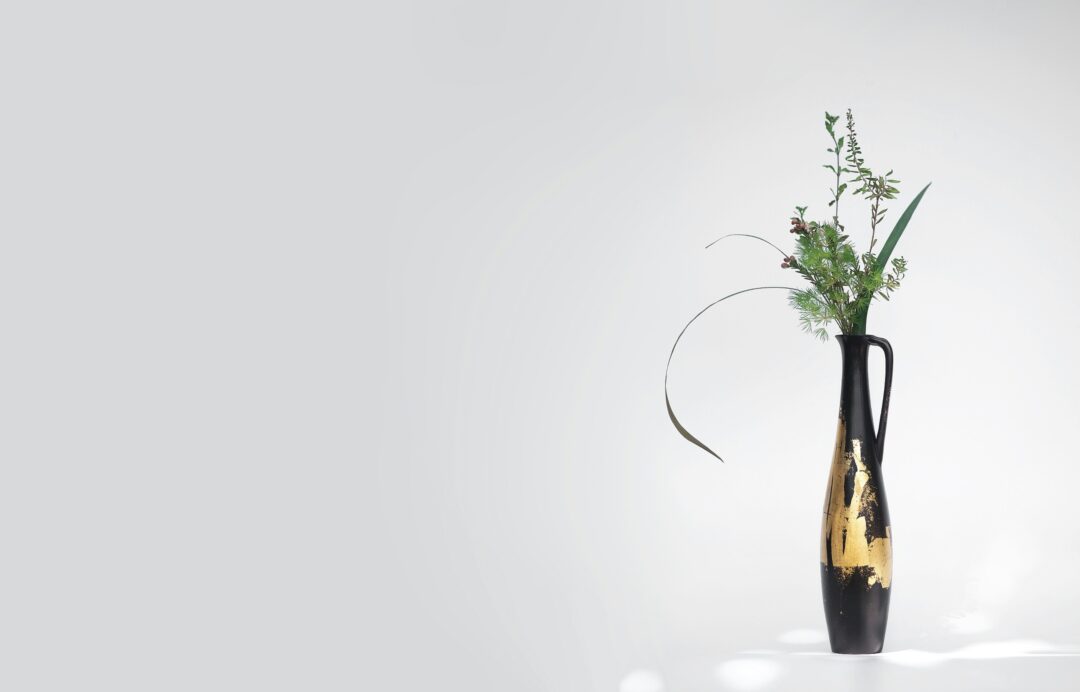
Yet the one I uncovered today was worn, age-stained, and not in a box but wrapped in cloth. When I unrolled it, I found it simple and familiar. It must have been one that was hung near the entrance of the house, near the table where my great-grandmother always displayed her Ikebana flower arrangement.
English translation isn’t always precise, but I can gather it roughly says: Looking back, among the many (options), it seems to be ten. The ten refers to what we consider the perfect score, 10 out of 10. Even the artist’s name, Heiraku, likely a moniker, translates into a beautiful message: Peaceful Comfort or Tranquil Joy.
My family, like most, had its share of hardship and carried generational trauma. How they dealt with it is another thing. At one point during my own soul-searching, I thought it was the nature of Japanese culture: not to complain, not to rehash things; yet now I understand it wasn’t stuffing down and ignoring past or present circumstances; I’ve come to believe it was letting go and accepting what is.
My third-generation (Sansei) Japanese American mother never spoke of Buddhism outright. It was always a way of being, a way to aspire to, but never a doctrine to follow; rather, a path to discover.
And this simple scroll with a simple poem paved a path to a contented life. It wasn’t the most valuable scroll they possessed nor the most beautiful, but for me it was the one that melded with my ancestors’ personal philosophy.
Perhaps it was why it held such a prominent place in the home. It was a humble scroll, with an ordinary painting of peppers under the script, a reminder that it doesn’t require monumental perfection to be exactly where you need to be. Sometimes the greatest lessons of peace are waiting in the most ordinary moments of life. The script suggests that the simple, everyday reality we’re looking at is the perfect ten.
This piece has shifted from an unadorned vintage heirloom to a deeply personal touchstone. I coined the term The Let Go while training horses; however, when I look back on my writing as a younger person, The Let Go was always present. I didn’t know what the scroll said, yet energetically it must have permeated my way of being. My family never quoted Buddhist scriptures, but quietly lived them.
What have you learned from this? What will you do next time? Those were the questions I faced, and now I realize I am exactly where I need to be.