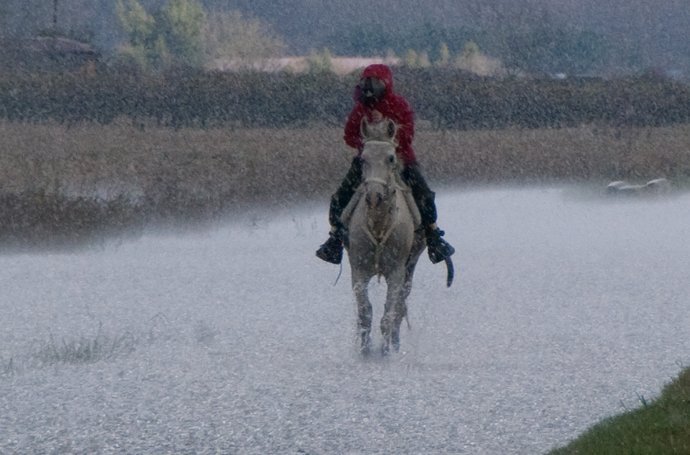
Photo: Awesome Lady, Fort Howes Endurance ride
Our whole life is set up in the path of least resistance. We don’t want to suffer. We don’t want to feel discomfort. So the whole time, we’re living our lives in a very comfortable area. There’s no growth in that.
David Goggins
Between instinct and soul, there is a part of us that already knows growth only happens when we step towards what we would rather avoid. Our physical limits are rarely pushed, like those of our ancestors. We are not crossing the country in covered wagons or homesteading land. Our food is not the fruit of our physical labor.
Instead, life has become convenient, and many have become accustomed to comfort and ease—jobs we can phone in, grocery orders, and meals delivered to the door. So when life hits us with something that moves us out of our comfort zone, we are often shocked by how unprepared we are. What we don’t use, we lose.
Could this be why we seek activities that test and push our limits?
Somewhere within our DNA, we need to prove to ourselves we still have it, or maybe it’s deeper than that. Maybe our DNA is driving us to push ourselves so we can become stronger.
I have always been a tomboy, so when I discovered the sport of endurance racing, riding a horse 50-100 miles, it fit like a glove. Often asked why I liked the sport, I could have spoken about being in nature or the thrill of the race, both are true. But the real reason, the driving force, was how it challenged me on a soul and spiritual level.
When faced with something uncomfortable, I am one to internalize it. First, I go inside to check out how I feel about it; then, I fake it. I pretend that everything is ok. Then, when the going gets tough and I’m faced with the unknown, I ask myself, What would it be if I did know the answer? And I fight tooth and nail to keep my head up and not dip into despair. Mainly, it works.
I have learned to fake it so well that those looking from the outside would never know I have demons. Some have called me fearless; this is erroneous. I have fear. I confront it on many levels, usually in the dark, solitary cover.
Horses are my biggest teachers. When a horse is spooked by something unknown, I turn it around to face what it fears. So I do the same with myself. I look directly into the eye of what brings discomfort and ask, What is the lesson here? What do I need to learn? I cannot count how many times I have sworn at an endurance race when I am tired, lost, injured, or scared, vowing that, This is definitely the last one I will ever do. Then the lights of the finish line can be seen through the darkness, and my discomfort is replaced by hope.
When we engage in activities that demand our total capacity, we reaffirm our potential and the core strength of the human spirit. If we embrace what lurks in the shadows rather than hide, we discover that the discomfort is a small price to pay for the rewards of pushing through our limitations.
Fear feels deep and endless, yet it isn’t. It gains ground when our energy is low, slowly eroding our resolve. But we will bounce back when we remember that fear lives in shallow waters. Our biggest weapon is understanding that the way out is always through.
I do have fear, but I do not fear discomfort.
Discomfort is temporary. It appears when we step out of the familiar. We grow when we push beyond what is known. In discomfort, we see what we are made of when no one is watching. Conversely, when we run from it, we rob ourselves of the chance to evolve. The paradox is that the more we push through pain, the larger our comfort zone expands. Maybe the fear isn’t of discomfort itself, but of what the fear will reveal about us?
We each face our discomfort uniquely. Some will internalize feeling it out privately, while others may shove it away and ignore it. Others are verbose, screaming to the world what is happening, while others become paralyzed with inaction. And some laugh uncontrollably as a reaction.
Discomfort is an excellent teacher. Whatever makes us uncomfortable indicates that we hold a charge or feeling around it. These are also represented by areas in which we are emotionally triggered. These reactions are a gift. They highlight where inner work is needed, where our attention is required for personal growth.
This zone of discomfort allows us to gauge our growth: we can observe and acknowledge if what once caused distress has dissipated.
Facing ourselves with open eyes yields the satisfaction that we are capable and brave. So maybe the real question is not whether we fear discomfort, but whether we are willing to meet the part of ourselves waiting for us inside it.
With ideas it is like with dizzy heights you climb: At first they cause you discomfort and you are anxious to get down, distrustful of your own powers; but soon the remoteness of the turmoil of life and the inspiring influence of the altitude calm your blood; your step gets firm and sure and you begin to look – for dizzier heights.
~ Nikola Tesla


Julie
I’ve always tried to avoid discomfort at all costs. I don’t like being uncomfortable. If I’m honest, I HATE being uncomfortable. I like that you said it highlights where inner work is needed. I guess this means I have a lot of work to do.
charisse
Julie, we all have work to do on ourselves. That is our spiritual journey, If we did not we would not be here. Be kind to yourself but do not shy away from what comes your way. Know that you always have the tools in the arsenal of who you are to handle the obstacles in your path , as long as you trust that you do.Once you look at what makes you uncomfortable in the eye, you will surprise yourself with your inner courage. Hang in There and Let GO of the resistence.
Peter Eduard M Wijnendaele
The picture, taken during an endurance ride, one of Charisse’s favourite sports, in the French Basque Country.
Joana, the rider, finished this 90km ride in a continuous curtain of rain. Though the ride was done more than ten years ago, Joana mentioned she still feel the strengthening of her daily goings and motivations. She was very happy to see her pic in this extraordinary article.
Thank you Cherise.
charisse
Peter Thank you, however, this is a photo of me on my friends mare Awesome lady at the Ft Howes FEI*** in Montana.Glad it invoked memories for yur friend though.
patrick
I love this reminder. Deep breaths and face forward in stressful times. I appreciate you sharing your weekly words more than you know. Cheers Charisse!